
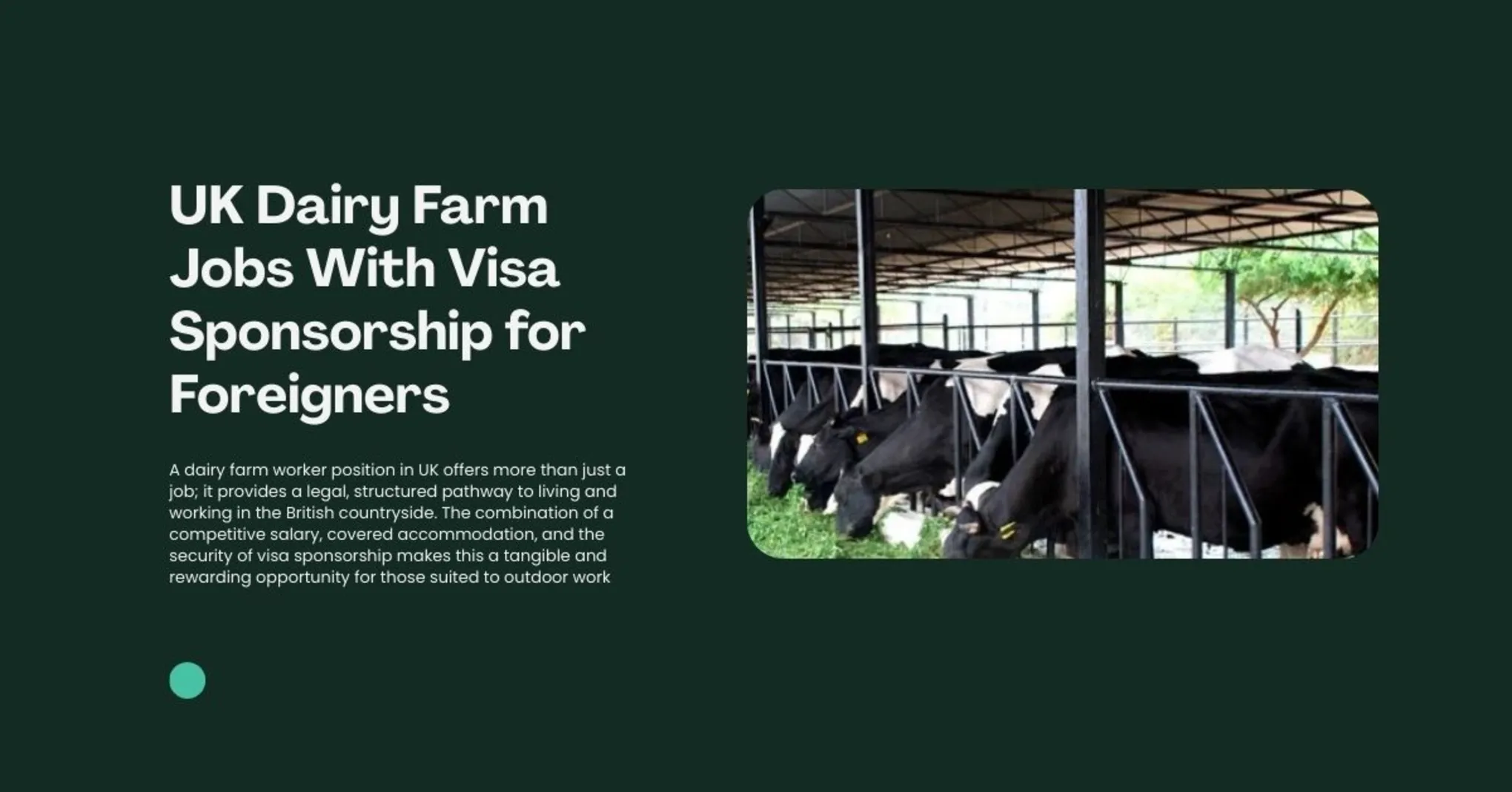
Imagine starting your day at dawn not in a crowded city, but in the calm British countryside, where your work directly supports one of the UK’s most important industries. Dairy farm worker jobs in the UK with visa sponsorship offer a genuine opportunity for hardworking individuals who enjoy outdoor work and are not afraid of physical labor.
UK farms are actively tackling labor shortages by offering visa sponsorship to international workers, creating a legal and stable pathway to live and work in the United Kingdom. No university degree or advanced English is required, just commitment, reliability, and a willingness to learn.
With hourly wages ranging from £10.42 to £12.50 and free or low-cost on-farm accommodation, this role provides both income stability and a lower cost of living.
Read Also: Dairy Farm Managers Jobs in UK with Visa Sponsorship
Why the UK Needs Dairy Farm Workers
The UK dairy industry is a cornerstone of national agriculture, producing milk, cheese, butter, and other essential products consumed daily across the country.
However, Brexit and workforce shortages have left many farms struggling to recruit reliable local labor for essential livestock and milking operations. As a result, UK farmers are increasingly welcoming international workers under visa sponsorship schemes to keep farms operational and productive.
The Reality of Dairy Farm Work
This is hands-on, physical work carried out in all weather conditions. While demanding, it offers a strong sense of purpose and a close connection to nature and animals.
Key Responsibilities Include:
- Performing basic fencing, fieldwork, and farm maintenance
- Feeding and watering dairy cattle
- Operating and assisting with automated milking systems
- Cleaning and maintaining barns, milking parlors, and equipment
- Monitoring livestock health and reporting illness or injury
- Assisting with calving and caring for newborn calves
- Moving cattle between pastures and housing
Who Is a Good Fit for This Role?
These roles are open to men and women, typically aged 21 and above. You are an ideal candidate if you:
- Are physically fit and healthy for demanding manual labor.
- Don’t mind early mornings, weekends, and a non-standard schedule.
- Have a calm, patient demeanor around animals.
- Possess a basic understanding of English for clear communication and safety.
- Are reliable, trustworthy, and able to work both independently and as part of a team.
While prior farm experience is a significant advantage, a positive attitude and proven work ethic can be just as valuable to many employers who provide on-the-job training.
Understanding the Visa: Your Legal Pathway
The primary visa route for this type of work is the Skilled Worker Visa. Many dairy farm roles (e.g., “Skilled Agricultural Worker”) meet the required skill level.
Here’s how the sponsorship process works:
- Secure a Job Offer: You must first be hired by a UK farm that holds a valid Sponsor Licence.
- Receive a Certificate of Sponsorship (CoS): Your employer provides this digital document, which details your role and salary.
- Apply for the Visa: You use the CoS to apply for your Skilled Worker Visa, proving your English skills and financial means.
- Receive Your Visa and Travel: Once approved, you can legally live and work in the UK for the duration of your contract.
This visa is typically tied to your employer for an initial period of up to 3 years and can be extended.
Salary, Benefits, and Cost of Living
Earnings:
- Hourly Wage: The minimum wage applies, but experienced workers can earn £10.42 to £13.00 per hour or more.
- Weekly/Monthly Pay: A full-time role can yield approximately £1,700 to £2,200 per month before deductions.
Typical Benefits Package:
- Accommodation: Often provided at a low cost or for free on the farm.
- Utilities: Usually included with your accommodation.
- Pension Scheme: Auto-enrollment into a workplace pension.
- Paid Holiday: Statutory paid annual leave.
- Visa Support: The employer covers the cost of the Certificate of Sponsorship and guides you through the process.
Living in rural areas significantly reduces your living costs, allowing you to save a substantial portion of your income.
Where Are the Jobs Located?
Dairy farming is concentrated in regions with lush grassland:
- South West England: Devon and Cornwall.
- Wales: Particularly in rural counties like Pembrokeshire and Carmarthenshire.
- Northern England: Cumbria, Lancashire, and Yorkshire.
- Scotland: The Southwest (Dumfries & Galloway) and the Highlands.
How to Apply: Step-by-Step Guide
Step 1: Prepare a Simple, Honest CV
- Focus on any manual labor, outdoor work, or experience with animals.
- Highlight soft skills: reliability, punctuality, and willingness to learn.
- Clearly state: “Eligible for Skilled Worker Visa sponsorship.”
Step 2: Target Your Job Search
Use specific keywords on job platforms:
- “Dairy farm worker Skilled Worker Visa sponsorship”
- “Livestock jobs UK sponsorship”
- “Agricultural worker UK visa”
Key Platforms to Use:
- Farms & Rural Properties section of Indeed.co.uk and Totaljobs.com.
- Farmer’s Guardian and Farmers Weekly job boards.
- Specialised agricultural recruitment agencies (e.g., De Lacy Executive, ADAS).
Step 3: Ace the Interview
Be prepared for a video call. Be honest about your experience and demonstrate your enthusiasm for the role and the rural lifestyle. Ask questions about the specific herd, team size, and typical daily routines.
Conclusion
A role as a dairy farm worker in UK is a genuine and accessible opportunity for those seeking stable employment abroad through a visa-sponsored pathway. While the work is physically demanding and requires an early start, it offers competitive pay, a lower cost of living, and the unique satisfaction of working closely with animals and the land.
This position provides more than just an income; it’s a chance to gain valuable international experience, save money, and build a foundation for potential long-term opportunities in the UK. If you are reliable, physically fit, and ready for a rewarding challenge, we encourage you to take the first step and apply.
Frequently Asked Questions
What salary can I expect?
You can earn £10.42 to £12.50 per hour, with monthly earnings of £1,600 to £2,200. Free or low-cost accommodation significantly increases savings.
Do I need a degree or experience?
No degree is required. Experience is helpful but not mandatory. Many employers offer training to motivated workers.